
Countdown to Submission Deadline
- 00 DAY
- 00 HRS
- 00 MIN
- 00 SEC
The information about the Keynote Speakers of ICCEE2026 is as follows, which will be updated regularly.
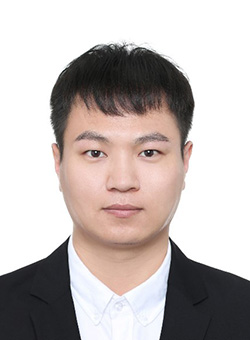
Dr. Yingfei Zan, Professor
College of Shipbuilding Engineering, Harbin Engineering University, Harbin, China
Biography: Dr. Yingfei Zan is a Professor in the College of Shipbuilding Engineering at Harbin Engineering University and a National-Level Young Talent. He also serves as the Deputy Director of the Key Laboratory of Polar Equipment Technology, Ministry of Industry and Information Technology at Harbin Engineering University. He received the B.S., M.S. and Ph.D. degrees from Harbin Engineering University, China in 2008, 2011 and 2016, respectively. From 2014 to 2015, he was at George Mason University, USA, as a visiting scholar sponsored by the China Scholarship Council. He has long been engaged in research on digitalization and simulation of ocean engineering operations, digital twin technology, fluid dynamics, polar digital engineering and other fields. He has led more than 50 research projects as principal investigator, including two sub-projects of the National Key R&D Program of China, projects funded by the National Natural Science Foundation of China (NSFC) (Young Scientists Fund and General Program), civil ship research projects, key project sub-topics, and major provincial key R&D projects. He has published over 60 academic papers and authored three monographs. He holds more than 30 authorized invention patents and over 20 software copyrights. He has received multiple provincial- and ministerial-level Science and Technology Awards in China, as well as international recognition including Gold Medals at the Geneva International Exhibition of Inventions. He has also received several Excellent Paper Awards from leading academic societies and conferences.
Topic: Water-entry Slamming of Porous Structures:Experiments and SPH Simulations
Abstract: Porous marine structures are widely applied to ocean and coastal engineering, whereas their hydrodynamic characteristics during water entry are still not well understood, particularly for offshore lifting operations and marine equipment deployment. Physical experiments and numerical simulations based on the Smoothed Particle Hydrodynamics (SPH) method were conducted to examine the water-entry slamming of porous plates. Good agreement is observed between the numerical predictions and the experimental measurements. The effects of water-entry velocity and porosity on the hydrodynamics of porous plates were investigated. The results indicate that both water-entry velocity and porosity have a nonlinear effect on the hydrodynamics of water-entry slamming. The dimensionless peak load coefficients decrease quadratically as porosity increases, while peak loads grow quadratically with entry velocity. Plates with more numerous, smaller, and closely spaced pores experience reduced slamming loads. The surface pressure distribution of porous plates is highly sensitive to porosity and pore arrangement. Increasing porosity and the number of pores reduces the spatial continuity of the pressure field, enhancing discontinuities. For a constant pore arrangement and number, porous plates with porosities of 15-25% display a distinct central cross-shaped pattern, whereas higher porosities (30-50%) produce a multi-peak distribution. At a fixed porosity of 20%, notable variations in surface pressure occur among porous plates with different pore arrangements. These results clarify how pore structures influence slamming behavior during water entry and offer useful insights for the design and operation of porous marine structures in offshore engineering applications.
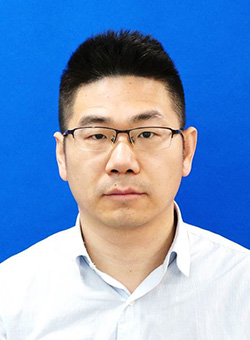
Dr. Yonghui Wang, Professor
School of Civil Engineering, Harbin Institute of Technology, Harbin, China
Biography: Dr. Yonghui Wang is a Professor in the School of Civil Engineering at Harbin Institute of Technology, China. He received his Ph.D. from the National University of Singapore in 2015. He has published 116 international journal papers, 1 monograph, and holds 8 patents. He has led 15 research projects, including grants from the National Natural Science Foundation of China (NSFC) and the Heilongjiang Provincial Natural Science Foundation. His scientific contributions have been recognized with First-Class Awards from both the China Steel Construction Society and Heilongjiang Province. He currently serves on the editorial boards of 6 international journals and is a member of several organizations, such as the China Construction Metal Structure Association and the International Association of Protective Structures.
Topic: Impact Responses of Steel Tubes at Elevated Temperatures
Abstract: The impact responses of steel tubes at elevated temperatures were experimentally and numerically explored. A drop weight impact loading system was employed to apply the impact forces to the specimens after they were heated to the target temperature by employing an assembled furnace. The impact resistance of specimens exhibited an initial decrease, later increase and eventual decrease as the temperature increased. This phenomenon was caused by the negative temperature sensitivity of steel strength induced by dynamic strain aging. Corresponding finite element (FE) models were established and verified with experimental results. The model was employed to investigate the bending moment distribution and energy absorption of the steel tubes subjected to impact at elevated temperatures. The FE results showed that steel tubes first experienced a bending-dominated phase, followed by a tensile-dominated phase during impact. These findings firstly provided the comprehensive demonstration of the influence of the temperature on impact responses of steel tubes, particularly clarifying the anomalous behavior characteristics caused by dynamic strain aging effect.
© Copyright 2015-2026 13th International Conference on Civil and Environmental Engineering - All rights reserved.

 X (formerly Twitter)
 LinkedIn